Inseparability in DUALISMS, the CATEGORIES OF BEING
In the name of God, the Most Gracious, the Most Merciful.
Of the discourse of dualisms, the inherent connection and interdependence between the two elements of duality, previously mentioned. They are inseparable, existence and non-existence. Whenever there is a form, there is a content; whenever there is a goal, there is a means; whenever there is a generality, there is privacy beneath it. The reverse is also true for the Categories of being.
We only speak of dualities based on evidence from the Wise Reminder (the Quran). If the established positivism philosophies align with the Quranic verses, it does not mean we are using the former to inferprete the latter. In other places, we have stated, in essence, that if this occurs, then there is a place for direct divine guidance. The connection and interdependence between the two elements of dualities is evidenced in the Wise Reminder (the Quran) and the words of the Wisest of Judges:
*There is no compulsion in religion. Righteousness has become distinct from error. So whoever disbelieves in false deities and believes in God has grasped the most trustworthy handhold with no break in it. And God is Hearing and Knowing.* (Al-Baqarah: 256)
And His words:
*And whoever submits himself to God while being a doer of good has grasped the most trustworthy handhold.* And to God belongs the outcome of all matters. (Luqman 20:2)
The name of God is mentioned twice in each of these two verses, and the phrase "holding fast to the firmest handhold" is repeated only twice throughout the Wise Reminder (the Quran), alluding to the seven oft-repeated verses (al-Mathani). The first instance is linked to the inseparability of the bond, as in the phrase "there is no break in it" (al-'urwat al-wuthqa). One of the fundamental characteristics of the seven dualities is their inseparability; neither element or side of the dualism can exist without the other, either in existence or non-existence. (Regarding the methodological repetition, see the article " Repetition of Similarities" in "Questionaries of the MINHAJ").
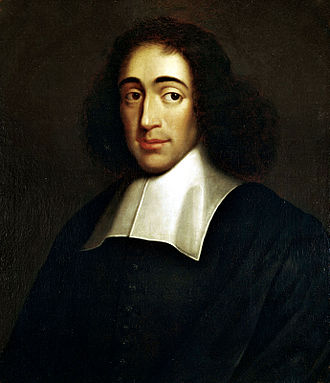
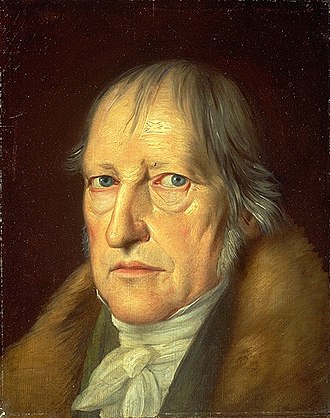
We do not believe—to the best of our knowledge—that positivist philosophies have addressed this characteristic in dialectics. For example, in Marx, who came after Hegel, the father of modern dialectics, there is the proletariat and capitalism as the two elements of the dialectical contradiction and conflict. The ultimate resolution is the disappearance of one of the two elements, capitalism. This is not a methodological argument, nor is it one of the dualisms notable in the “Categories of Being”; consequently, there is no inseparability. Marx and Engels classified it as Dialectical Materialism, and since it is materialistic, it does not scale up to the level of Dualisms Dialectic. A detailed explanation of this is beyond the scope of this discussion. As for Hegel, may God have mercy on him, despite the difficulty of reading his philosophy, as even Hegelians themselves admit, we can say that he did not advocate the transformation of one element into the other, as Marx did, nor did he emphasize the issue of the inseparability between the two elements of Dualisms Dialectic. If there is any transition or transformation, it is of the dialectic as a whole; the two elements together in a new synthesis. Bearers of philosophy are best acquainted with its intricacies. The one who drew attention to this inseparability and interdependence before the Western dialectical philosophers was Imam al-Ghazali, may God have mercy on him, in his statement: “Every sought-after knowledge cannot be derived except from two knowledges that are fundamental, and not just any two, but rather when a specific kind of duality and condition are met between them. If this duality is met, it yields a third knowledge, which is the desired knowledge.” This was previously discussed in the article “Abrogation of the Dualities.” It is worth noting that the Imam did not base this statement on textual evidence from the Wise Reminder (the Quran), which we are discussing. Furthermore, the interdependence between the two knowledges (the two elements or the two sides of the duality) is not explicit but is derived intellectually from the condition of the duality. This is largely a guidance from God, may His grace be exalted, through Sufism and drawing closer to the Creator. It goes without saying that this methodological language was unknown before us, and to God belongs all praise and gratitude.
The characteristic of inseparability and interdependence distinguishes between types of dualities; only the Seven Dualities are found to possess this characteristic. If you say that white and black are a duality, then it is not a universal concept of existence, nor is it one of the seven pairs of dualities, because one can have white without black alongside it, or black hidden within it, except in logic and knowledge. Therefore, there is no necessary connection in duality in terms of perception and reality. However, if you say that color expresses a form, then there must be a subject beneath it—an essence in the language of the ancients, a substance in the language of logicians—a universal duality encompassing all that humans know of existing things, whether material or intellectual. So, what is this white thing? This is the answer to the subject. Similarly, in religions, if we say that heaven and hell are a duality of opposition, there is no necessary connection between them, nor is there any necessary connection. They are not universal concepts of existence, even though they constitute its becoming. Either one attains heaven as reward or one attains hell as punishment; they are separate in terms of recompense in reality. But the idea that heaven and hell are concomitant in terms of existence as religious and doctrinal entities is a matter for consideration in the science of dualities, which involves detailed distinctions between them and other types of dualities.
The apostate Dr. Nasr Hamid Abu Zayd, in his writings on the Quran, has been excessively and simplistic in his arguments, to the point that his pages overflow with them. For him, everything is framed as a dialectic, even considering linguistic aspects, which he doesn't call dualisms. One example is the dialectic of God/Man (which he places between the two elements with a slash). If we were to consider this a valid dialectic or a duality from the seven oft-repeated verses (al-Fatihah), the inherent connection within it would imply disbelief. Therefore, it falls outside the realm of valid dualisms and is not a true dialectic except in his mind. The theological issue is that man is created by God, and the created does not precede or necessitate the Creator. God is independent of both creation and creation. Man perishes, and the face of your Lord, full of majesty and honor, remains. Therefore, there is no inherent connection between existence and non-existence, and non-existence ultimately belongs to man. However, the notion of a "dialogue" between the servant and the Lord is also fraught with disbelief. This issue, which is not yet clear in our understanding of the seven oft-repeated verses, necessitates a definition and distinction between dialectic and argumentation. As for the existence of a "disputation" between them, this is a well-established fact in the Wise Reminder, the words of the Exalted, the Everlasting, may His name be glorified:
*Here you are, those who dispute on their behalf in worldly life, but who will dispute with God on their behalf on the Day of Resurrection, or who will be their advocate?* (An-Nisa: 109)
The mention of the act of arguing twice in the same verse is conclusive proof of the double meaning. Did you not see that the mention of the firmest handhold in Surah Luqman came as a follow-up to the discussion of the duality of the inner and outer, then argumentation and knowledge, thus combining the type and its attribute? His statement, the Wisest of Judges:
* Do you not see that God has subjected to you whatever is in the heavens and whatever is on the earth and has lavished upon you His favors, both apparent and unseen? And among the people are those who dispute about God without knowledge or guidance or an enlightening Book. And when it is said to them, "Follow what God has revealed," they say, "Rather, we will follow that which we found our fathers doing." Even if Satan was inviting them to do so? To the torment of the blazing Fire. And whoever submits himself to God while doing good has grasped the most trustworthy handhold. And to God is the outcome of all matters. (Luqman 20:2)
This rich topic represents a significant turning point in the study of dualities, pairs, dialectics, and the seven oft-repeated verses in particular. Every diligent scholar has a share in this. It is a turning point that demonstrates that God's knowledge encompasses not an atom's weight, neither on earth nor in the heavens, nor even in the minds of people, where their understanding has become limited. Here we recall the saying of Sheikh al-Islam Ibn Taymiyyah, may God have mercy on him, regarding judging between people according to what God has revealed and bearing witness against them. He said in his book "Refuting the Conflict Between Revelation and Reason":
"The Salaf and the Imams who condemned and denounced the discourse on substance, body, and accident implicitly included in their words a condemnation of those who introduce the meanings intended by these people using these terms into the fundamentals of religion, its proofs, and its issues, whether in negation or affirmation." But if the correct and established meanings of these texts are known and expressed in these terms to those who understand, so that what agrees with the truth and what contradicts it becomes clear, then this is of immense benefit. It is a form of judging between people according to the Book in matters of disagreement, as Allah Almighty says:
"Mankind was one community, then Allah sent prophets as bearers of good tidings and warners and revealed with them the Scripture in truth to judge between people concerning that in which they differed. And none differed over it except those who were given it - after clear proofs had come to them - out of jealous animosity among themselves. And Allah guided those who believed..." Because of what they differed about concerning the truth, by His permission. And Allah guides whom He wills to a straight path. (Al-Baqarah: 213)
This is like judging between all nations according to the Book regarding what they differed about in terms of meanings they expressed through their conventions and customs. This requires knowing the meanings of the Book and the Sunnah, and knowing the meanings of these people using their own words, then considering these meanings in light of these other meanings to reveal what is agreed upon and what is disagreed upon.
In the noble verse, the words of God and disagreement are repeated three times, and the truth and guidance are mentioned in the two-part verses, indicating that God's path is based on the two-part verses and that there is disagreement about it among nations. Thus, the statement of Ibn Taymiyyah is valid in this context.
And Allah knows best. He is the Guide to the Straight Path.
The book “Ishraq Al-Minhaj” contains more comprehensive and detailed information about the seven oft-repeated verses and their interrelationship, and success comes from God.
- Add new comment
- 7 views